PHASE 2_Ottavia
Abhinav Bellam, Genhui Yu, Foyuan Li, Leah Zhao, Xiangyu Liu
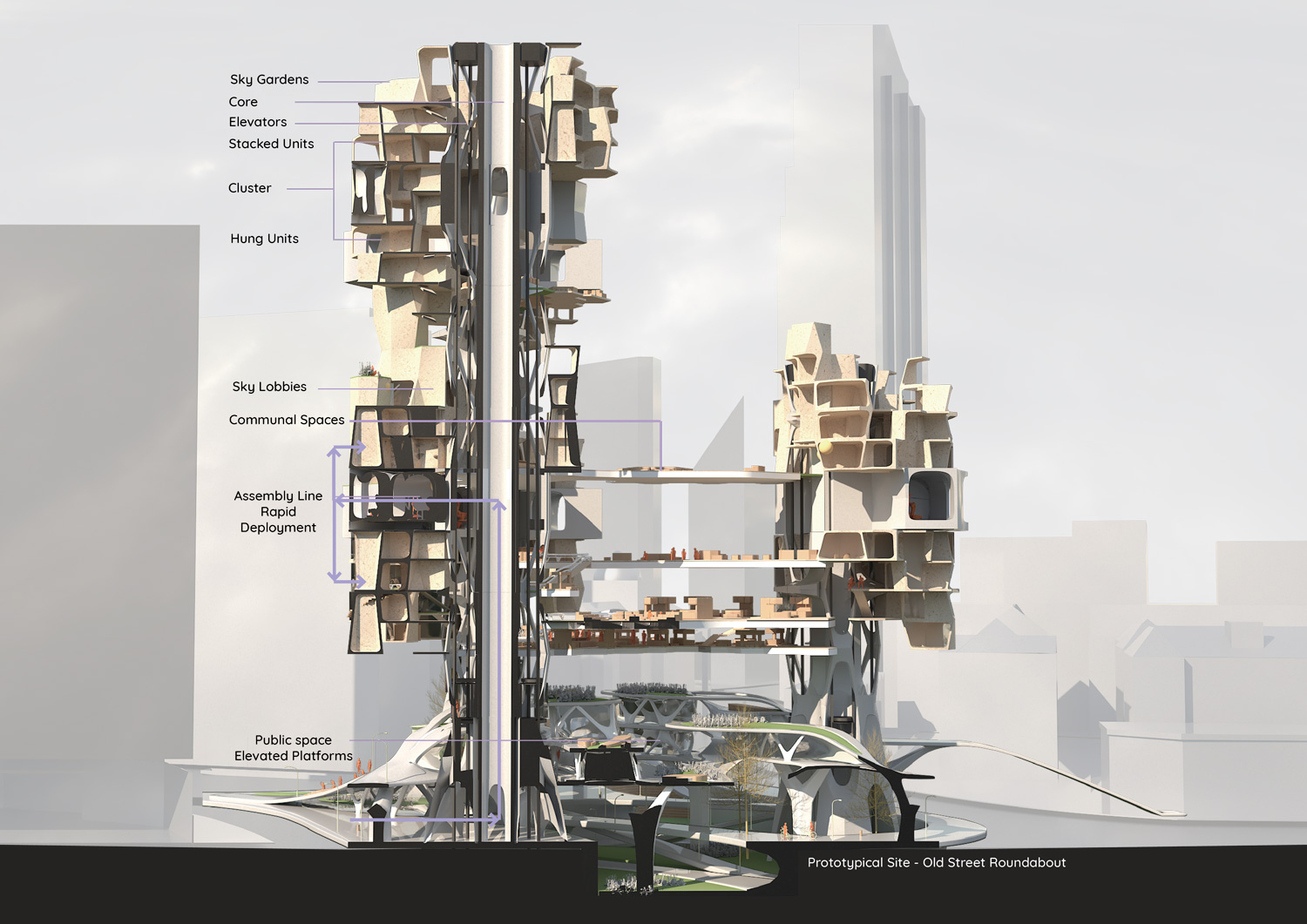
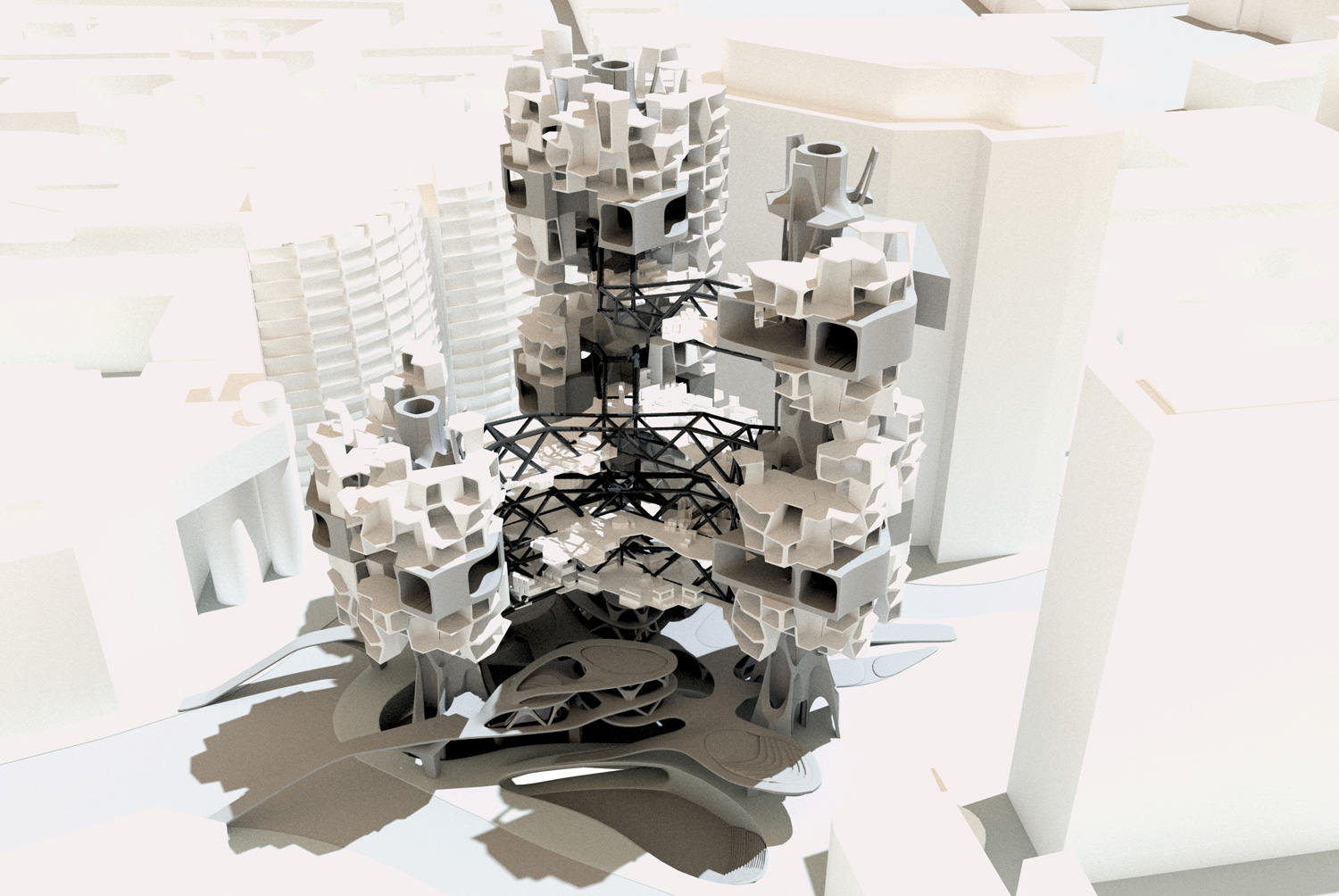
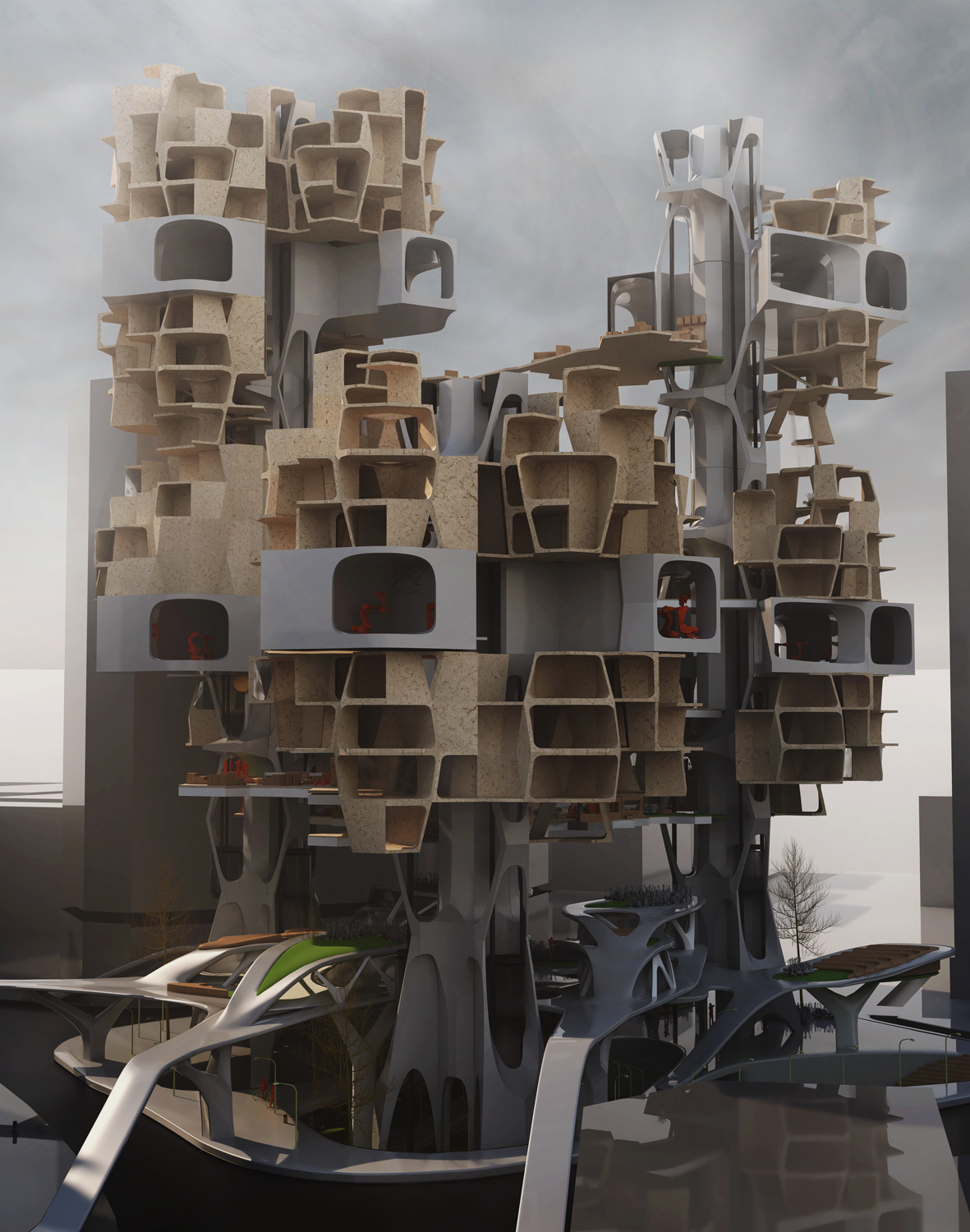
The research aims at devising housing conditions for communities living on the roundabouts of central London. The research focuses on the centralised location of roundabouts to activate the surrounding urban environment by introducing local programmes on elevated platforms that associate the former with the surrounding commercial activities.
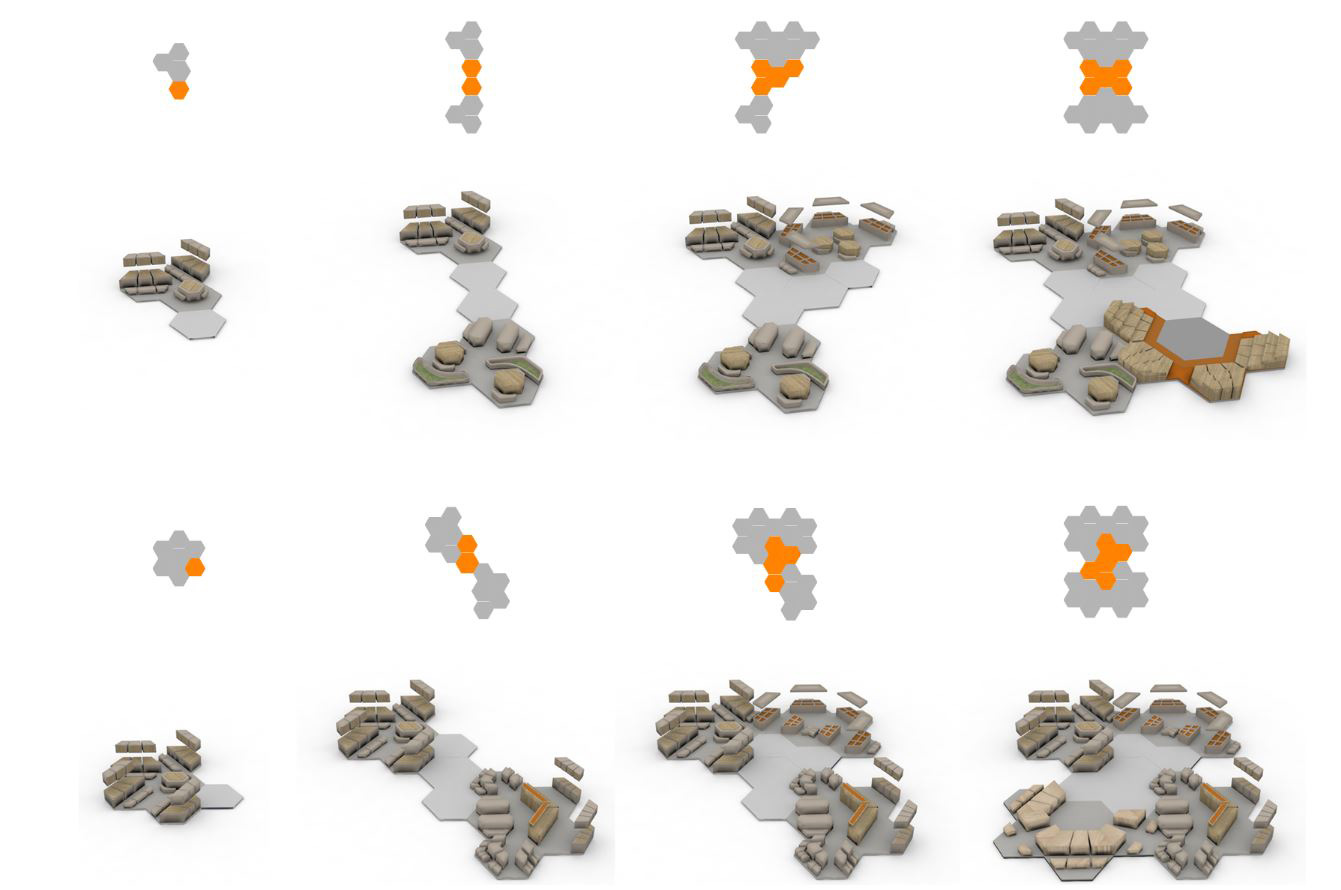
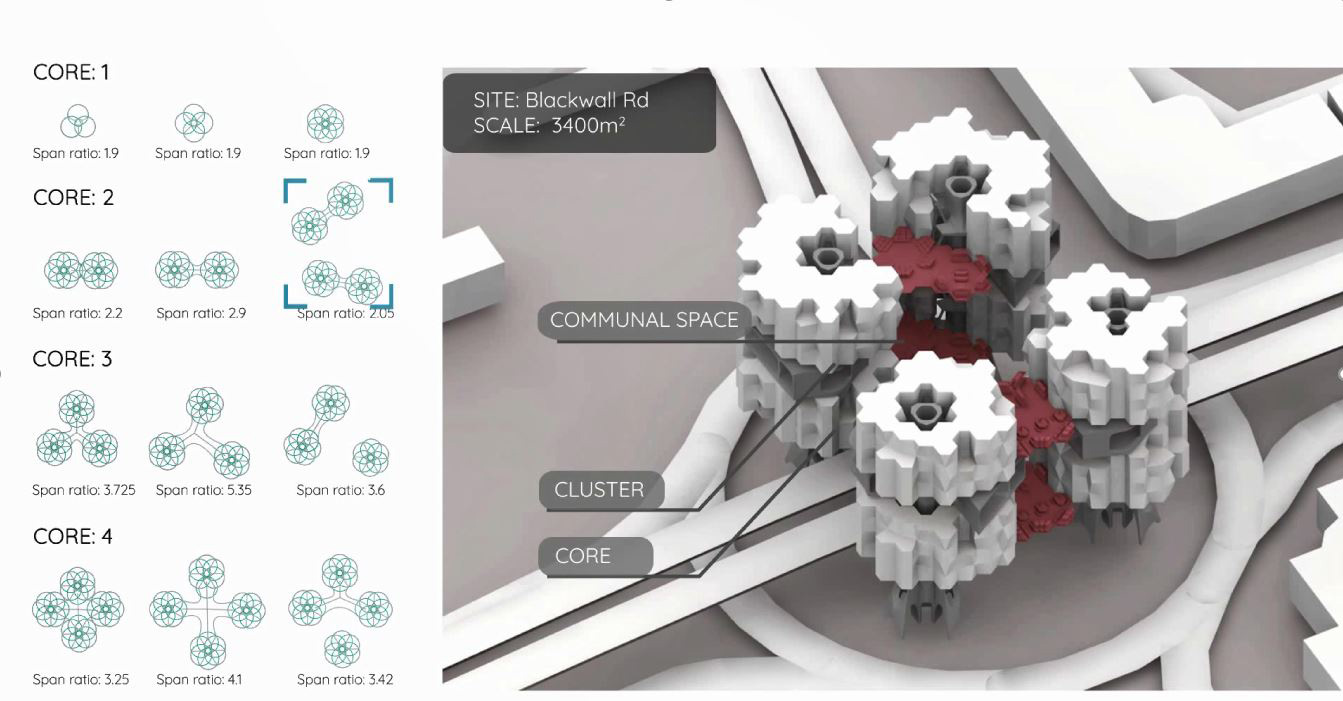
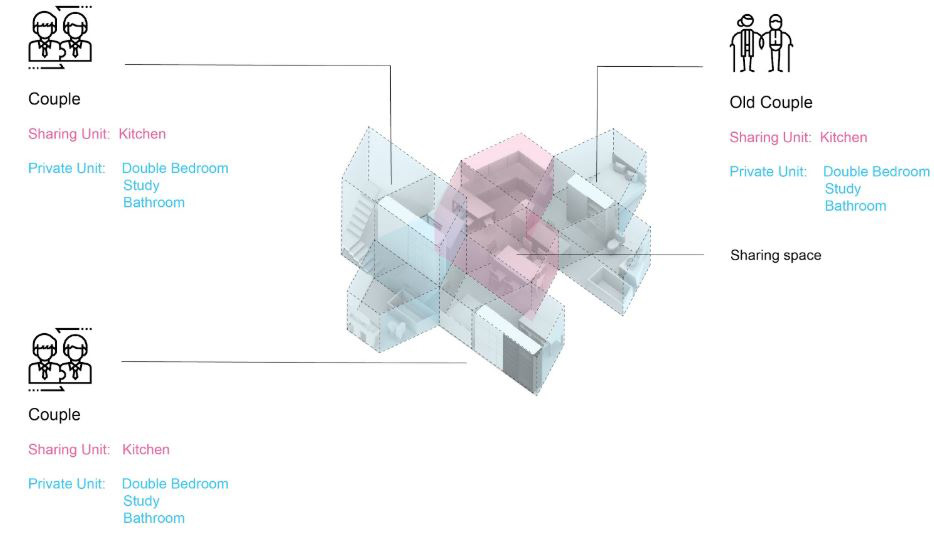
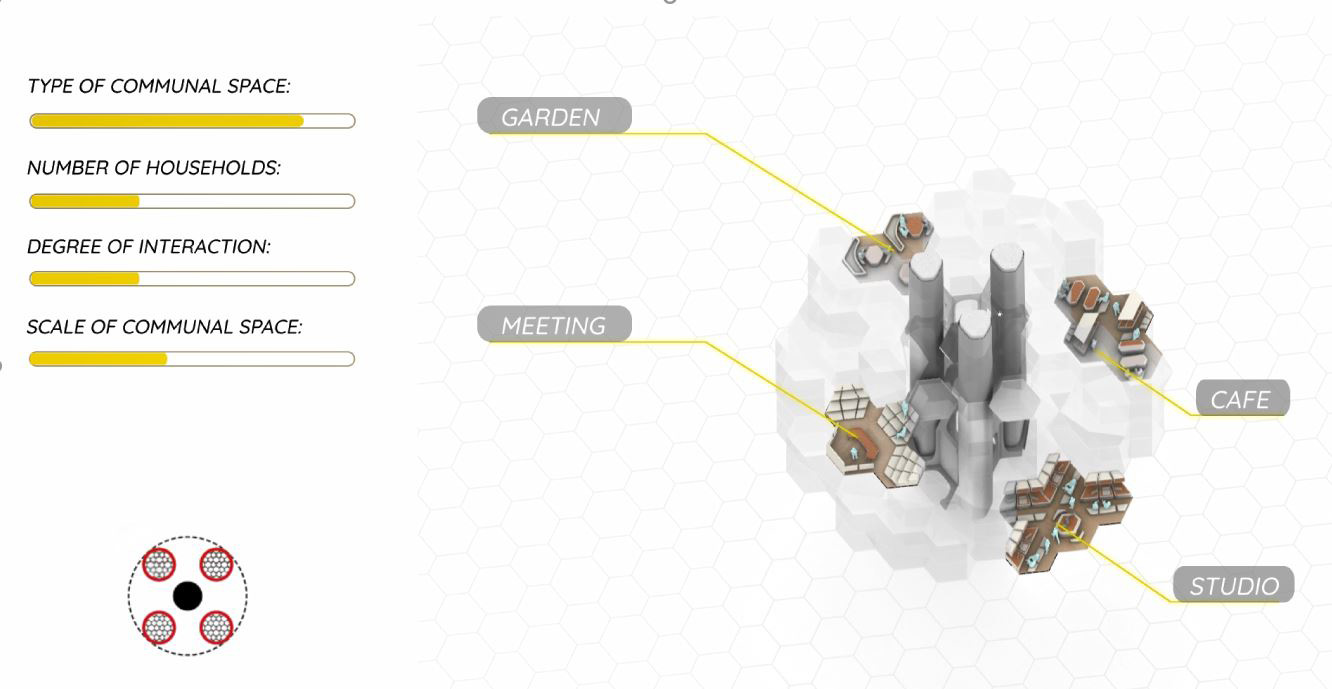
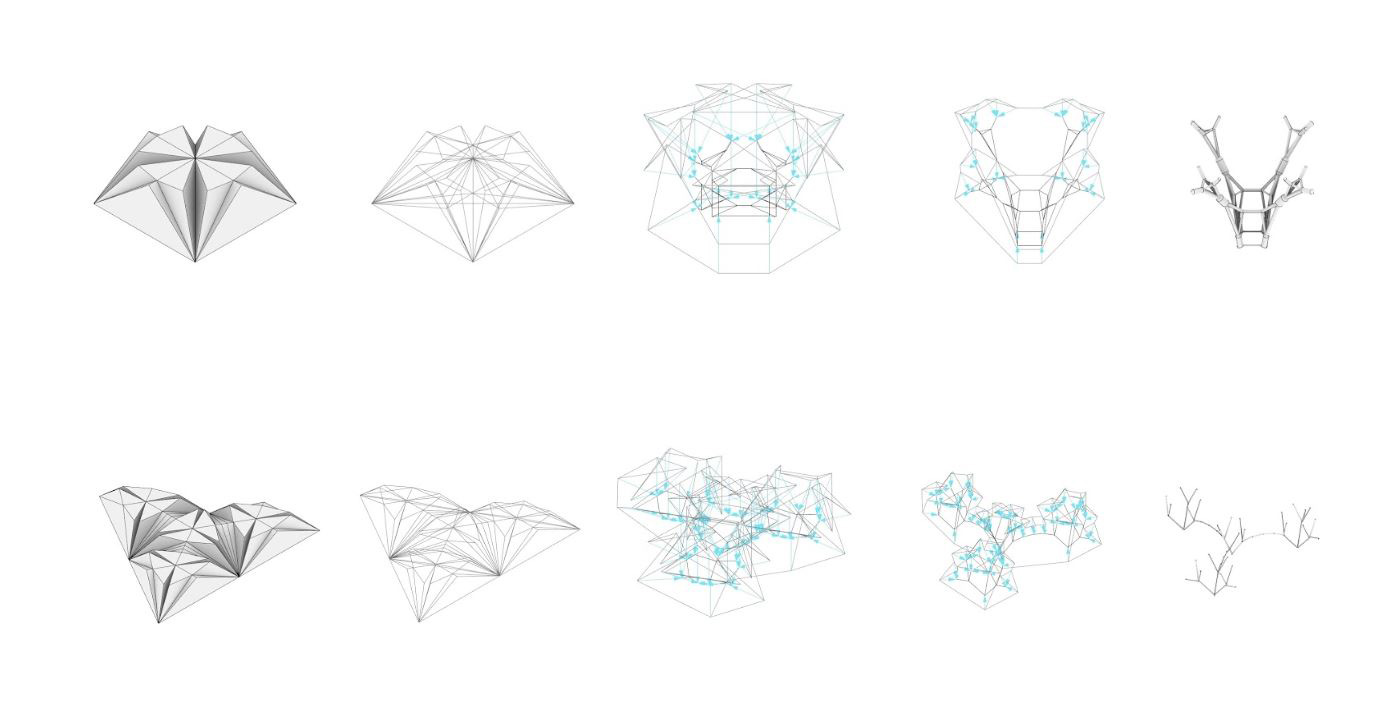
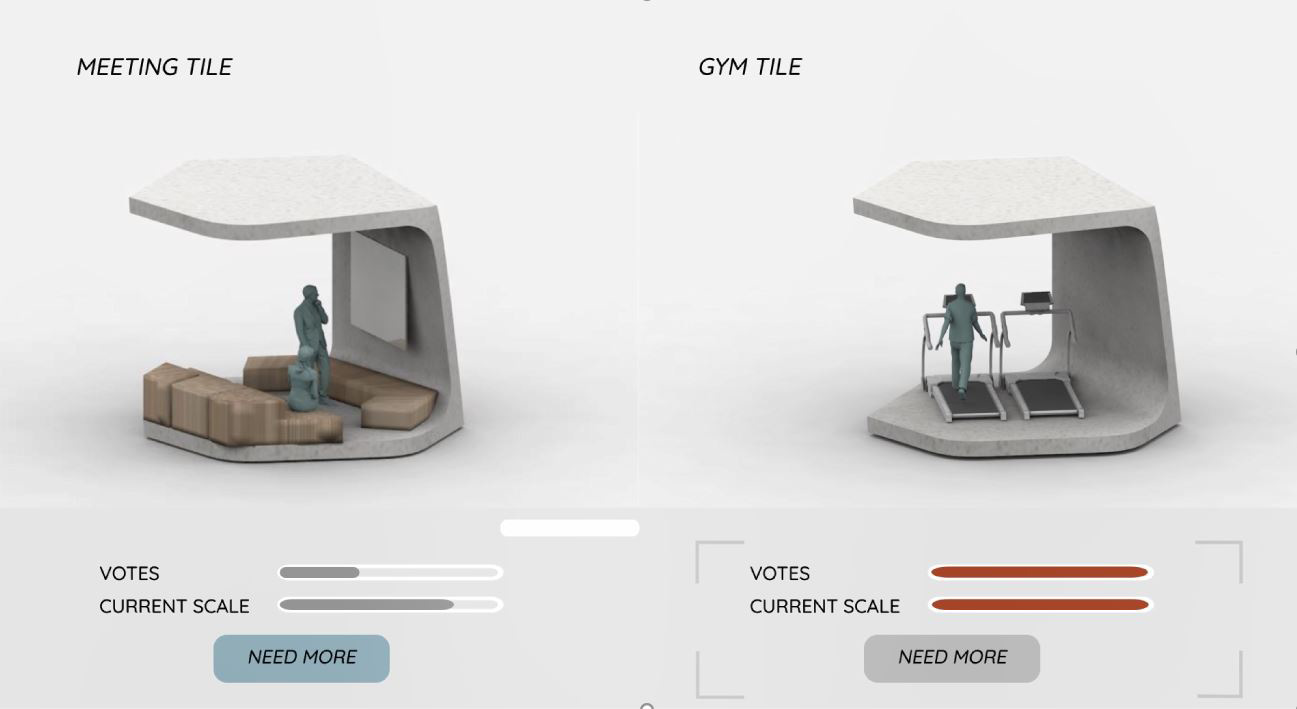
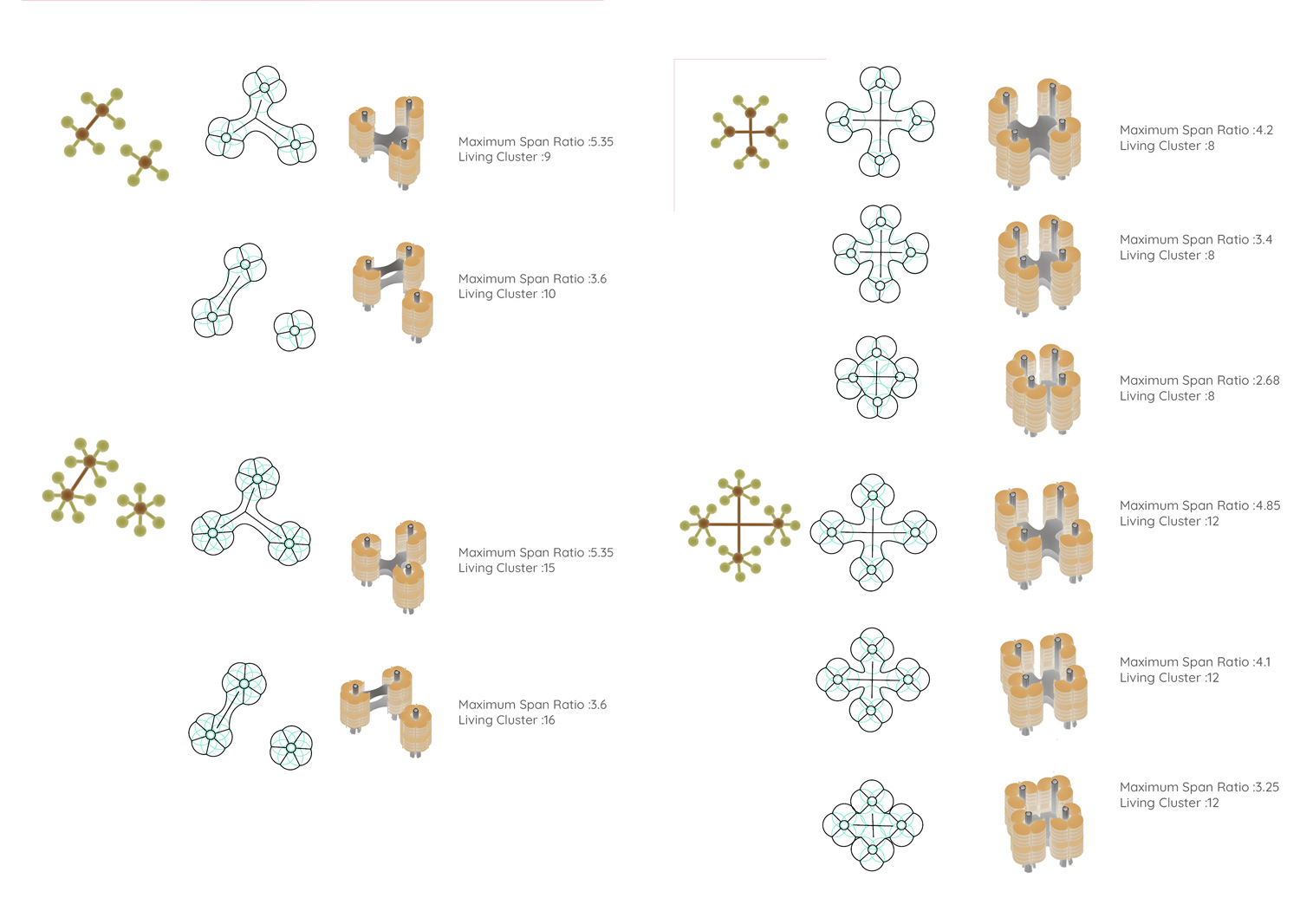
The spatial organisations are defined by user preferences and social interests based on both shared and privatised spaces, which vary among the clusters. On the level of the cluster and the whole, the various compositions of user profiles and their strategies to manipulate unit customisation generates a variety of social and spatial outcomes. These are studied and evaluated via simulation through a turn-based game where users in a community participate in the negotiations that shape future outcomes. These matrices of decisions informed a prototypical model for vertically growing clusters that consist of a central core, community space and a series of units. This model is adaptive to both site conditions and user preferences. The units are modular, prefabricated and lightweight, while their growth patterns are based on compact packing strategies (such as hanging) that allow in-situ aggregation at any specific cluster location and at comply with demands of rapid deployment.
1
2
3
4
5
6
7
8
9